Mormons Say Polygamy Morally Wrong

By Amy Choate-Nielsen

Deseret News
Published: Sunday, Jan. 15, 2012 7:00 p.m. MST

David Letterman knows how to get a laugh.Like most comics, he riffs on the day’s news, deadpans the camera and revels in audacity.”Oh, did you hear about this?” the host of CBS’ Late Show with David Letterman asked his audience recently. “A campaign staffer on the Newt Gingrich campaign was fired because he was making negative comments about Mormons. I thought, now, wait a minute — isn’t Newt in favor of multiple wives?”
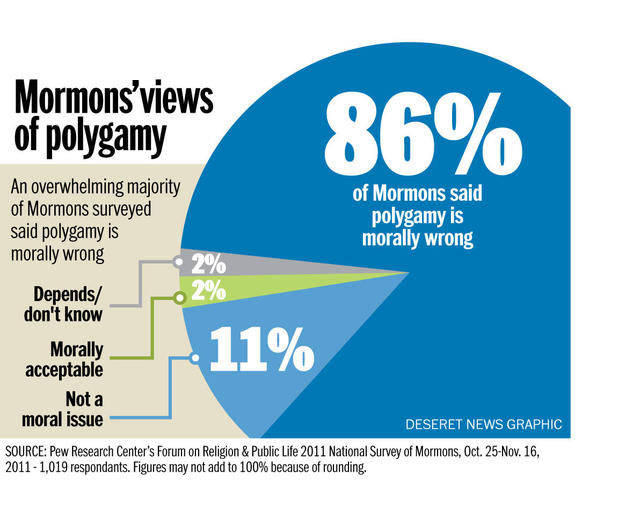
Mormons say polygamy wrongLaughter rumbled from the audience followed by applause. The polygamy punch line is a familiar one when it comes to poking fun at Mormons — as though Mormons and polygamy are synonymous in mainstream media. Ironically, the practice that’s most linked to Mormons is a practice most Mormons oppose, according to a groundbreaking new study of Mormons in America released Thursday by the Pew Research Center‘s Forum on Religion and Public Life.

According to the study, members of The Church of Jesus Christ of Latter-day Saints unequivocally reject polygamy — only 2 percent said the practice is morally acceptable — evidence of a yawning gap in what Mormons believe and how they are perceived. Mormons’ opinions are overwhelmingly conservative, the study shows, but in many ways, their views are also surprising — especially when it comes to opinions on moral issues, divorce, homosexuality and polygamy. Read more

Mormon Beliefs and Attitudes on Immigration

A recent The Pew Research Center‘s Forum on Religion and Public Life conducted an in-depth survey of Mormons in the United States. Mormon is a nickname sometimes used to describe members of The Church of Jesus Christ of Latter-day Saints. The fourth article in a series that appears in Deseret News is evaluating the results of this survey and providing context for the results.

Immigration is a controversial topic in the United States. The survey asked one question on this topic. They were asked which of two statements most closely matched their view, even if they didn’t completely agree. They were asked whether immigrants strengthen or burden the nation. No distinction was made between legal and illegal immigration, leaving those polled to decide for themselves what the question meant.

Mormon Immigration views from Pew StudyIn the general U.S. population, 45 percent of Americans feel that immigrants strengthen the country, while 44 percent burden it. 12 percent feel that neither or both are true or they have no opinion on the subject. Mormon views closely mirror these statistics. 45 percent of Mormons also believe immigrants strengthen the nation, although a smaller number, 41 percent, consider them a burden on society. The number of Mormons who accept both or neither or who have no opinion is higher, at 14 percent.

These numbers put them at odds with evangelical Christians, one of the few political areas in which they disagree. Within the white evangelical population, 59 percent believe immigrants are a burden, and 27 percent believe they strengthen the country. Like Mormons, 14 percent answered both, neither, or no opinion.

The statistics for Mormons shows a strong divide based on age, income, and education, as well as on religious commitment. Only 36 percent of highly committed Mormons see immigrants as a burden, while 50 percent of those who are less committed see them as a burden. This largely correlates with economic status. 84 percent of Mormons who are highly committed to their religion are college graduates. (The church strongly encourages education, which may be a factor in this.) Only 50 percent of those with high school educations are strongly committed to their faith. This statistic is very unusual in the religious world. For most religions, the least educated are the most religious.

49 percent of Mormons under age 50 see immigrants as a strength. 39 percent of Mormons over 50 see it as a strength.

Beyond the study’s statistics, several other factors influence the Mormon view of immigration. Many Mormons serve missions for their church. For two years, they live wherever they are sent, learning the language and living as the people in that community live. They go into the homes, attend the churches, and do service work in addition to their missionary work. Many of those serve in Spanish countries and have a realistic view of the hardships faced by those people. They come home with a compassionate view of the world and an understanding that Americans have much easier lives than most. The love missionaries almost invariably develop for the people they served influences their views on immigration.

Finally, the church has taken very specific stands on the subject of illegal immigration in recent years. Mormons believe God has sent a prophet to lead His church, just as He has always done in ancient times, and so, Mormons are asked to sustain the prophet as the leader of the Church. Official statements from the prophet or the Church are considered to be from God.

The Church officially endorsed the basic principles of the Utah Compact, a law working to create a balanced legal approach to immigration. In November, 2011, L. Whitney Clayton gave an official statement from the church in honor of the first anniversary of the bill. The statement said in part:

The Utah Compact is consistent with three principles we believe should be carefully balanced when considering immigration:

  • We follow Jesus Christ by loving our neighbors. The meaning of neighbor includes all of God’s children, in all places and in all times.
  • We recognize an ever-present need to strengthen families. Families are meant to be together. Forced separation of working parents from their children weakens families and damages society.
  • We acknowledge that every nation has the right to enforce its laws and secure its borders.

We continue to encourage lawmakers everywhere to consider laws that properly balance love of neighbors and the importance of keeping families together, within the framework of just and enforceable laws.” (See Utah Compact One-Year Anniversary Marked by Utah Community Leaders.)

The official Mormon position is to encourage its members to stay in their homelands or to immigrate legally, but once they are here, however they came, they are to be treated with love, dignity, and respect, and laws should not separate families.

For a more in-depth look at the issue of Mormons and immigration, read the Deseret News article: Mormons’ immigration attitudes set them apart, by Eric Schulzke, Deseret News, published: Saturday, Jan. 14, 2012 8:12 p.m. MST.

Enhanced by Zemanta

Mormons’ Focus on Marriage & Family Highlighted in Pew Survey

SMITHFIELD — After dinner, three baths, four bedtime stories and a half-a-dozen goodnight kisses for 2-year-old twins Brock and Isaac and 6-year-old Ellie, Erin and Brian Thompson finally sink into the couch with weary smiles.

Being parents is just what they always wanted. And they love it.

“Of course we have our crazy moments,” Thompson says, “but for the most part we just try to find the good things in the day and remember that they’re only going to be little for so long.”

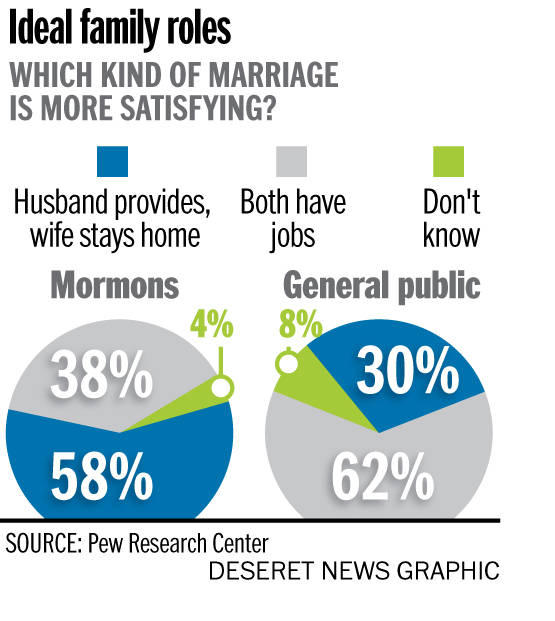
Mormon family marriage focus PewAs members of The Church of Jesus Christ of Latter-day Saints, the Thompsons believe that maintaining a strong marriage and raising and teaching children are essential keys to happiness and their most important responsibilities on earth.

In fact, 81 percent of Mormons say being a good parent is “one of the most important things in life,” according to a new survey by the Pew Research Center‘s Forum on Religion & Public Life — the first survey of Mormons about Mormons, by a non-LDS research organization. Read more

Copyright © 2013 Mormon History. All Rights Reserved.
This website is not owned by or affiliated with The Church of Jesus Christ of Latter-day Saints (sometimes called the Mormon or LDS Church). The views expressed herein do not necessarily represent the position of the Church. The views expressed by individual users are the responsibility of those users and do not necessarily represent the position of the Church. For the official Church websites, please visit LDS.org or Mormon.org.