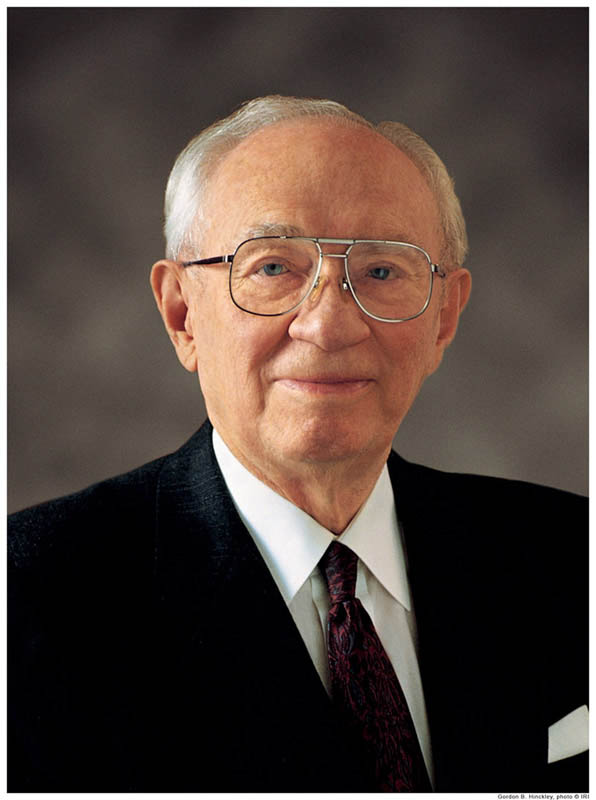
History and Growth of the Church under Gordon B. Hinckley

Gordon B. Hinckley was involved in Church leadership from the time he was very young. In 1935, at the age of 25, President Hinckley was called to serve on the Radio, Publicity, and Mission Literature Committee of the Church. He worked hard in this calling, making visual and audio materials for missionary use. Over the years his calling required him to write several radio and motion pictures scripts as well as pamphlets for the missionaries. This devotion to using modern technology to promote the Church stayed with President Hinckley and he became the first modern-day prophet to appear on national television. In 1996, he accepted the invitation for an interview with Mike Wallace on Sixty Minutes. Two years later, he accepted an interview with Larry King on Larry King Live. Both of these interviews were highly publicized and achieved the goal of getting national exposure to the Church to wipe away remaining prejudice and teach people the true character of The Church of Jesus Christ of Latter-day Saints.

Family A Proclamation to the World MormonIn 2000, the First Presidency and the Quorum of the Twelve Apostles issued their testimony of Jesus Christ in a document entitled “The Living Christ.” Soon after his call to the presidency, President Hinckley read an even more impressive document in the 1995 General Relief Society meeting. This document, a proclamation to the world of the divinity and importance of the family, has been referenced countless times in the years since. As the family continually comes under attack from the world and society, the Saints have “The Family: A Proclamation to the World” to study and apply in their lives. This call to arms to protect the eternal nature of the family was intended to strengthen all families in the world, and will do so for all those who heed its admonitions.

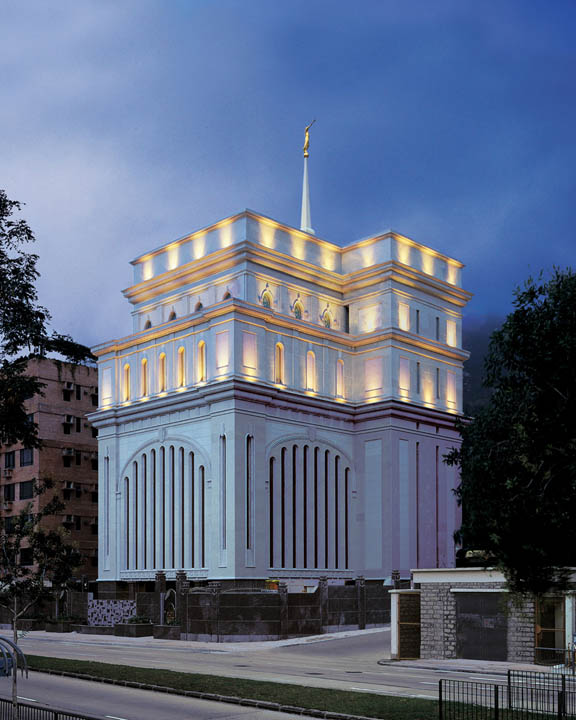
President Hinckley will always be remembered for his focus on temple work and his initiative to build more temples. In his thirteen years serving as president of the Church, the number of temples more than doubled from forty-eight to one hundred twenty-four. More temples are announced each General Conference, and the eternal blessings of the temple continue to be brought to Saints all over the world. Though many still must make huge sacrifices to attend the temple closest to them, which may be a several-day journey, it is now an achievable goal. President Hinckley understood that there are no blessings in this life more important than temple ordinances, which allow us to be sealed together as families for all eternity.

  • Hongkong China Mormon TempleHong Kong China Temple
  • Mount Timpanogos Utah Temple
  • St. Louis Missouri Temple
  • Vernal Utah Temple
  • Preston England Temple
  • Monticello Utah Temple
  • Anchorage Alaska Temple
  • Colonia Juárez Chihuahua México Temple
  • Madrid Spain Temple
  • Bogotá Colombia Temple
  • Guayaquil Ecuador Temple
  • Spokane Washington Temple
  • Columbus Ohio Temple
  • Bismarck North Dakota Temple
  • Columbia South Carolina Temple
  • Detroit Michigan Temple
  • Halifax Nova Scotia Temple
  • Regina Saskatchewan Temple
  • Billings Montana Temple
  • Edmonton Alberta Temple
  • Raleigh North Carolina Temple
  • St. Paul Minnesota Temple
  • Kona Hawaii Temple
  • Ciudad Juárez México Temple
  • Hermosillo Sonora México Temple
  • Albuquerque New Mexico Temple
  • Oaxaca México Temple
  • Tuxtla Gutiérrez México Temple
  • Louisville Kentucky Temple
  • Palmyra New York Temple
  • Fresno California Temple
  • Medford Oregon TempleMedford Oregon Mormon Temple
  • Memphis Tennessee Temple
  • Reno Nevada Temple
  • Cochabamba Bolivia Temple
  • Tampico México Temple
  • Nashville Tennessee Temple
  • Villahermosa México Temple
  • Montréal Québec Temple
  • San José Costa Rica Temple
  • Fukuoka Japan Temple
  • Adelaide Australia Temple
  • Melbourne Australia Temple
  • Suva Fiji Temple
  • Mérida México Temple
  • Veracruz México Temple
  • Baton Rouge Louisiana Temple
  • Oklahoma City Oklahoma Temple
  • Caracas Venezuela Temple
  • Houston Texas Temple
  • Birmingham Alabama Temple
  • Santo Domingo Dominican Republic Temple
  • Boston Massachusetts Temple
  • Recife Brazil Temple
  • Porto Alegre Brazil Temple
  • Montevideo Uruguay Temple
  • Winter Quarters Nebraska Temple
  • Guadalajara México Temple
  • Perth Australia Temple
  • Columbia River Washington Temple
  • Snowflake Arizona Temple
  • Lubbock Texas Temple
  • Monterrey México Temple
  • Campinas Brazil Temple
  • Asunción Paraguay Temple
  • Nauvoo Illinois Temple
  • The Hague Netherlands Temple
  • Brisbane Australia TempleBrisbane Australia Mormon Temple
  • Redlands California Temple
  • Accra Ghana Temple
  • Copenhagen Denmark Temple
  • Manhattan New York Temple
  • San Antonio Texas Temple
  • Aba Nigeria Temple
  • Newport Beach California Temple
  • Sacramento California Temple
  • Helsinki Finland Temple

In the year 2000, at the October General Conference of the Church, President Hinckley announced that Church membership exceeded 11 million and that the one-hundredth temple (the Boston Massachusetts Temple) had just been dedicated. At the close of President Hinckley’s administration, Church membership was rapidly approaching 13 million. President Hinckley is responsible for much good done in the Church and for helping the Church find ways to reach more of its members worldwide more effectively.

Gordon Bitner Hinckley

Gordon B. Hinckley, Prophet, Seer, Revelator, and Temple Builder

Gordon B. Hinckley Mormon ProphetGordon Bitner Hinckley was the prophet of The Church of Jesus Christ of Latter-day Saints (which church is frequently misnamed the Mormon Church) from March 1995 until his death on January 27, 2008. During the administrations of his predecessors Spencer W. Kimball, Ezra Taft Benson, and Howard W. Hunter, President Hinckley performed many of the duties of the Church’s presidency when these men were ill. As president of the “Mormon Church,” he was considered by faithful Mormons to be a prophet, seer, and revelator of God’s will on behalf of humanity. Hinckley also once served as Chairman of the Church Board of Education and the Board of Trustees that govern the Church Educational System.

Gordon B. Hinckley was born in Salt Lake City, Utah, on June 23, 1910. As a child, Hinckley was very sickly. He struggled with severe asthma and allergies, and so his family moved out of downtown Salt Lake City to the more rural East Millcreek area of Salt Lake City. He grew up on that farm and his health improved. In 1928, he completed high school. After attending the University of Utah, he was called to go on a mission to London in 1933, an unusual occurrence for Depression-era Mormons, as few could afford to serve as Mormon missionaries. Hinckley returned to the United States in 1935 and soon accepted a job offer to lead the Mormon Church‘s new public relations department (he had studied English and Journalism in college). Hinckley’s responsibilities included developing the Mormon Church’s fledgling radio broadcasts and making use of the era’s new communication technologies. Starting in 1937, he served on the Sunday School General Board. On April 29, 1937, he married Marjorie Pay (November 23, 1911–April 6, 2004). They had been married 67 years at the time of her death.

After service in a stake presidency, he became a General Authority of the Mormon Church in the now-discontinued-position of Assistant to the Quorum of the Twelve Apostles in 1958. In 1961, he himself became an Apostle and member of that Quorum, the youngest at that time. In the early 1980s the ill health of both Church President Spencer W. Kimball and his aging Counselors N. Eldon Tanner and Marion G. Romney led the Church leadership to resort to the occasional practice of adding an additional counselor to the First Presidency, and Hinckley filled this position on July 23, 1981. At the time of Tanner’s death in 1982, Romney succeeded him as First Counselor and Hinckley succeeded Romney as Second Counselor.

During this time period, there were a number of questionable, new Mormon historical documents that began to surface, and Gordon B. Hinckley oversaw the purchase of some of these documents. Later, most of the newly-surfaced documents turned out to be forgeries of Mark Hofmann, including the Salamander Letter. Because of his prominence in the Church and his responsibility to oversee the purchase of historical documents, Hinckley became a key figure in the investigation of Hofmann.

By this time, however, Hinckley was largely shouldering the burdens of the First Presidency by himself. Though he officially remained Second Counselor, he was informally referred to in the press as “acting President of the Church.” Kimball and Romney remained largely out of the public eye until President Kimball died in November 1985. Longtime President of the Quorum of the Twelve Apostles, Ezra Taft Benson, became Church President, and named Hinckley First Counselor. Romney succeeded Benson as President of the Twelve, though he never exercised the duties of this position. Thomas S. Monson became Second Counselor, and, for a while, all three members of the First Presidency were able to perform their duties.

In the early 1990s however, Ezra Taft Benson developed serious health problems that removed him from public view, and First Counselor Gordon B. Hinckley again carried out many of the duties of the President of the Church until Benson died in 1994. Howard W. Hunter, who had succeeded Romney as President of the Twelve, became Mormon Church President and set apart Hinckley and Monson as his Counselors, Hinckley additionally becoming President of the Twelve by seniority. And when Hunter died after a presidency of only nine months, Hinckley was chosen to be president of the Mormon Church at the age of 84 (his two predecessors had both acceded at age 86) after being unanimously sustained by members of the Quorum of the Twelve.

Hinckley is known for his extensive building of Mormon temples. Under his leadership, the Mormon Church has expanded the number of temples worldwide from 27 to 136 (as of April 2012, with 15 under construction and another 15 announced, though some of these were built after Hinckley’s death). In 2000 alone, more Mormon temples opened (34) than existed at the time of Hinckley’s calling to the First Presidency. Over two-thirds of all Mormon temples currently in operation were dedicated by Hinckley. Hinckley has also overseen other building projects like the LDS Conference Center.

On 23 September 1995, Hinckley announced and read The Family: A Proclamation to the World, a statement of belief and counsel prepared by the First Presidency and Quorum of the Twelve of the Mormon Church. This was followed by another proclamation in 2000 called The Living Christ, which contains the testimony and teachings of the Mormon Church about the Savior, Jesus Christ.

On 31 March 2001, Hinckley announced the Perpetual Education Fund, a large endowment that provides loans to students in developing nations. It is funded entirely by donations, with the assumption that students will pay back into the fund when they are able. This concern for the poor and the importance to help others in helping themselves has been a theme of Gordon B. Hinckley’s work.  He has greatly expanded the Mormon Church humanitarian efforts throughout the world and has been personally involved in many disaster relief and service projects.

On July 22, 2005, friends of President Hinckley performed in a celebration commemorating his 95th birthday. In addition to the twenty-two thousand people who attended in person, the event was broadcast on BYU Television and to meetinghouses on the Church’s closed-circuit satellite system. Mike Wallace, former host of 60 Minutes, narrated Hinckley’s life and his accomplishments. Afterward, Hinckley spoke, thanking everyone for attending, and saying, “Let’s do this again in five years.”

On January 24, 2006, Gordon Hinckley underwent surgery to remove cancerous growths in his large intestine. According to Deseret News, the procedure went well and a rapid recovery was expected. He was released from the hospital on January 31. On March 10, 2006, Hinckley traveled to Santiago, Chile, to rededicate the Mormon temple there. He told the Chileans that it was likely he wouldn’t get back to see them again. Less than a month later, he presided over General Conference. Some speculated he was in bad health because he did not give the opening address. These speculations were soon debunked when a stern and strong Hinckley gave the concluding talk of the Priesthood Session.

On June 23, 2006, on his 96th birthday, Hinckley participated in a groundbreaking ceremony at BYU for a new building to be named in his honor. The building is called the Gordon B. Hinckley Alumni and Visitors Center. Gordon B. Hinckley has been described as the most-traveled Mormon Church leader—past or present, having traveled millions of miles over the years to fulfill assignments. In spite of his advanced age, he continues to travel the world over as he dedicates temples and meets with the Saints. Up until the age of 95 and his cancer surgery, he had spent only one night in a hospital in his life. He was a man with remarkable vigor for his age.

President Gordon B. Hinckley has been exceptionally influential in the growth of the Church throughout the world as he has met with diplomats in his travels. His 60 years of public relations experience and his natural ability to be warm and friendly served him well when he was in the spotlight. His expression of love for all people, regardless of race or religion, has won him many friends around the world, enabling the Mormon Church to become an international institution.

On June 23, 2004 (Hinckley’s 94th birthday), President George W. Bush awarded Hinckley the Presidential Medal of Freedom, the highest civilian honor awarded by the United States, in a ceremony at the White House. The press release put forth by the White House stated:

“Gordon B. Hinckley [...] has inspired millions and has led efforts to improve humanitarian aid, disaster relief, and education funding across the globe.”

He was the recipient of a number of educational honors including: the Distinguished Citizen Award, from Southern Utah University; Distinguished Alumni Award, from the University of Utah; and honorary doctorates from Westminster College, Utah State University, University of Utah, Brigham Young University—Idaho, Brigham Young University, and Southern Utah University. He received the Silver Buffalo Award of the Boy Scouts of America and was honored by the National Conference (formerly the National Conference of Christians and Jews) for his contributions to tolerance and understanding in the world.

Gordon Bitner Hinckley passed away on January 27, 2008, at the age of 97. He was a beloved man and leader.

Additional Resources:

Official Church History – Basic Facts about Gordon B. Hinckley


Copyright © 2013 Mormon History. All Rights Reserved.
This website is not owned by or affiliated with The Church of Jesus Christ of Latter-day Saints (sometimes called the Mormon or LDS Church). The views expressed herein do not necessarily represent the position of the Church. The views expressed by individual users are the responsibility of those users and do not necessarily represent the position of the Church. For the official Church websites, please visit LDS.org or Mormon.org.